
Functional medicine vs. traditional healthcare sets the stage for this enthralling narrative, offering readers a glimpse into a story that is rich in detail and brimming with originality. As we delve into the intricate differences between these two approaches to healthcare, a world of contrasting philosophies and methodologies unfolds before us.
Exploring the depths of patient-centered care, treatment modalities, and approaches to chronic illness, this comparison sheds light on the diverse paths that healthcare can take, paving the way for a deeper understanding of what truly defines modern medical practices.
Definition of Functional Medicine and Traditional Healthcare
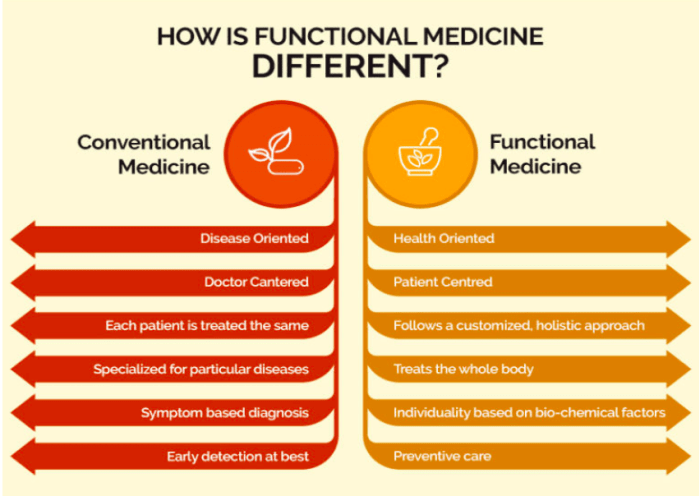
Functional Medicine focuses on treating the root cause of health issues by looking at the body as a whole system, rather than just treating symptoms. It emphasizes personalized care and prevention to optimize overall health and wellness. On the other hand, Traditional Healthcare typically involves treating symptoms with medications or surgeries without always addressing underlying causes.
Core Principles of Traditional Healthcare
- Focuses on treating symptoms rather than root causes.
- Relies heavily on prescription medications and surgeries.
- Often follows a one-size-fits-all approach to treatment.
Core Principles of Functional Medicine
- Focuses on identifying and treating the root cause of health issues.
- Emphasizes personalized care based on individual needs and genetic makeup.
- Promotes prevention and lifestyle changes to optimize health and wellness.
Comparison of Functional Medicine and Traditional Healthcare Approaches
| Aspect | Functional Medicine | Traditional Healthcare |
|---|---|---|
| Focus | Treats root causes | Treats symptoms |
| Approach | Personalized and holistic | Standardized and symptom-based |
| Treatment | Emphasizes prevention and lifestyle changes | Relies on medications and surgeries |
Patient-Centered Care
Patient care in Functional Medicine differs significantly from Traditional Healthcare in its approach. Functional Medicine focuses on treating the root cause of illness rather than just managing symptoms, providing a more holistic and personalized approach to patient care.
Focus on Root Cause
Functional Medicine practitioners take the time to understand the unique genetic, environmental, and lifestyle factors that contribute to a patient's health issues. By addressing these underlying causes, rather than just treating symptoms, Functional Medicine aims to promote long-term health and wellness.
- For example, a patient presenting with chronic fatigue in Functional Medicine may undergo comprehensive testing to identify imbalances in hormones, gut health, or nutrient deficiencies that could be contributing to their symptoms. Treatment would then focus on correcting these imbalances to restore energy and vitality.
- In contrast, Traditional Healthcare might prescribe medications to manage the fatigue symptoms without necessarily investigating the root cause. This approach may provide temporary relief but does not address the underlying issues affecting the patient's health.
Symptom Management in Traditional Healthcare
Traditional Healthcare often relies on medications and procedures to alleviate symptoms without delving deeper into the factors causing the illness. This approach can lead to temporary relief but may not result in long-term health improvements.
- For instance, a patient with high blood pressure in Traditional Healthcare may be prescribed medication to lower their blood pressure without addressing lifestyle factors such as diet, exercise, or stress that could be contributing to the condition. While medication can help manage the symptoms, it does not necessarily address the root cause of the hypertension.
- Additionally, Traditional Healthcare may focus on treating each symptom separately, leading to a fragmented approach to patient care that does not consider the interconnected nature of the body systems.
Treatment Modalities
Functional Medicine and Traditional Healthcare utilize different treatment modalities to address patient needs. Functional Medicine focuses on holistic approaches that include nutrition, lifestyle changes, and supplements, while Traditional Healthcare often relies on pharmaceuticals and surgeries to treat acute conditions.
Functional Medicine Treatment Modalities
Functional Medicine emphasizes the importance of addressing the root cause of health issues rather than just treating symptoms. Treatment modalities in Functional Medicine may include:
- Nutrition: Customized dietary plans tailored to individual needs to optimize health and well-being.
- Lifestyle Changes: Encouraging patients to adopt healthy habits such as regular exercise, stress management, and adequate sleep.
- Supplements: Using vitamins, minerals, herbs, and other natural remedies to support the body's healing processes.
Traditional Healthcare Treatment Modalities
Traditional Healthcare often focuses on managing symptoms and providing immediate relief through interventions like pharmaceuticals and surgeries. Treatment modalities in Traditional Healthcare may include:
- Pharmaceuticals: Prescription medications aimed at alleviating symptoms and managing chronic conditions.
- Surgeries: Invasive procedures performed to correct or treat specific health issues, such as removing tumors or repairing injuries.
Emphasis on Prevention and Wellness
Functional Medicine places a strong emphasis on preventive care and wellness, aiming to optimize overall health and reduce the risk of chronic diseases. By addressing lifestyle factors and promoting healthy habits, Functional Medicine practitioners empower patients to take control of their well-being and prevent future health problems.In contrast, Traditional Healthcare often focuses on treating acute conditions and managing symptoms rather than preventing illness.
While Traditional Healthcare is essential for emergency care and critical interventions, Functional Medicine offers a complementary approach that prioritizes long-term health and wellness.
Approach to Chronic Illness
Functional Medicine and Traditional Healthcare have different approaches when it comes to managing chronic illnesses such as autoimmune disorders and digestive issues. Functional Medicine focuses on identifying the root cause of the illness by looking at the body as a whole system, rather than just treating symptoms.
On the other hand, Traditional Healthcare often relies on symptom management through medications and procedures without addressing the underlying cause.
Functional Medicine Approach
Functional Medicine aims to restore balance in the body by addressing factors such as diet, lifestyle, environment, and genetics. For example, in the case of autoimmune disorders, Functional Medicine practitioners may focus on reducing inflammation, healing the gut, and balancing the immune system through personalized treatment plans that may include dietary changes, supplements, stress management techniques, and detoxification protocols.
Traditional Healthcare Approach
Traditional Healthcare typically manages chronic conditions by prescribing medications to alleviate symptoms. For autoimmune disorders, this may involve immunosuppressants or anti-inflammatory drugs to control the immune response. In the case of digestive issues, medications like proton pump inhibitors or antacids may be prescribed to manage symptoms like acid reflux or ulcers.
Restoring Balance for Overall Health
Functional Medicine approaches chronic illnesses with the goal of restoring balance in the body to improve overall health. By addressing the root cause of the illness and creating personalized treatment plans, Functional Medicine aims to support the body's natural healing processes and enhance overall well-being.
This holistic approach can lead to long-term improvements in health outcomes and quality of life for patients dealing with chronic conditions.
Closing Notes
In conclusion, the dichotomy between Functional Medicine and Traditional Healthcare reveals a nuanced landscape where patient empowerment and holistic well-being play pivotal roles. By embracing the unique strengths of each approach, individuals can navigate their healthcare journey with greater insight and informed decision-making.
Answers to Common Questions
How does Functional Medicine differ from Traditional Healthcare?
Functional Medicine focuses on addressing the root cause of illness, while Traditional Healthcare often focuses on managing symptoms.
What treatment modalities are commonly used in Functional Medicine?
Functional Medicine utilizes nutrition, lifestyle changes, and supplements as primary treatment modalities.
How does Traditional Healthcare typically manage chronic conditions?
Traditional Healthcare usually manages chronic conditions by treating the symptoms rather than addressing the underlying causes.
What is the core principle of Functional Medicine?
The core principle of Functional Medicine is to treat the body as a whole system and focus on personalized care for each individual.